Introduction
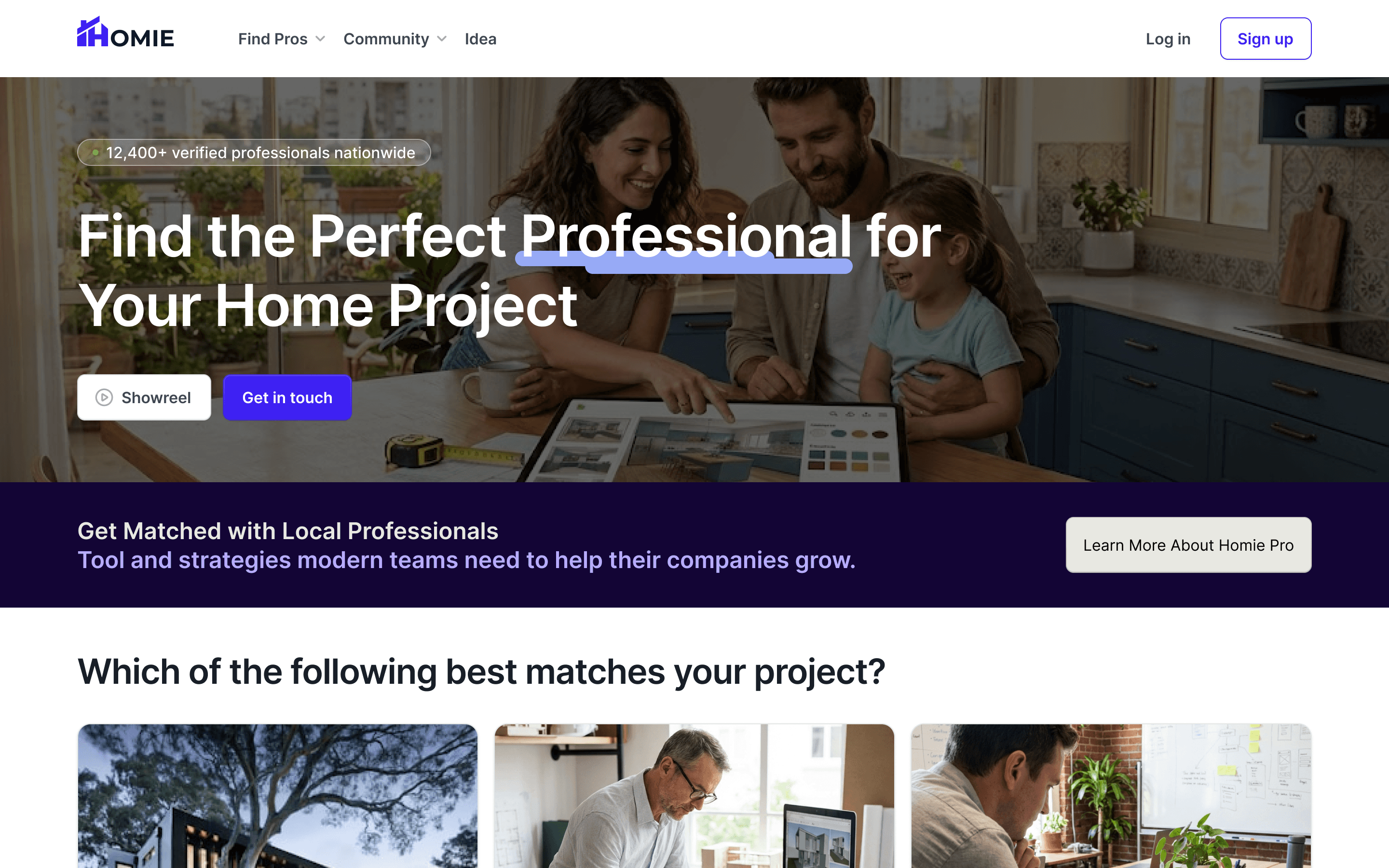
Homie is a home renovation marketplace that connects homeowners with local professionals such as architects, contractors, and designers.
Users typically engage with the platform in two ways. Some arrive with a clear need and use filters or guided flows to find the right professional.
Others start by browsing ideas and exploring inspiration, often without a defined plan.
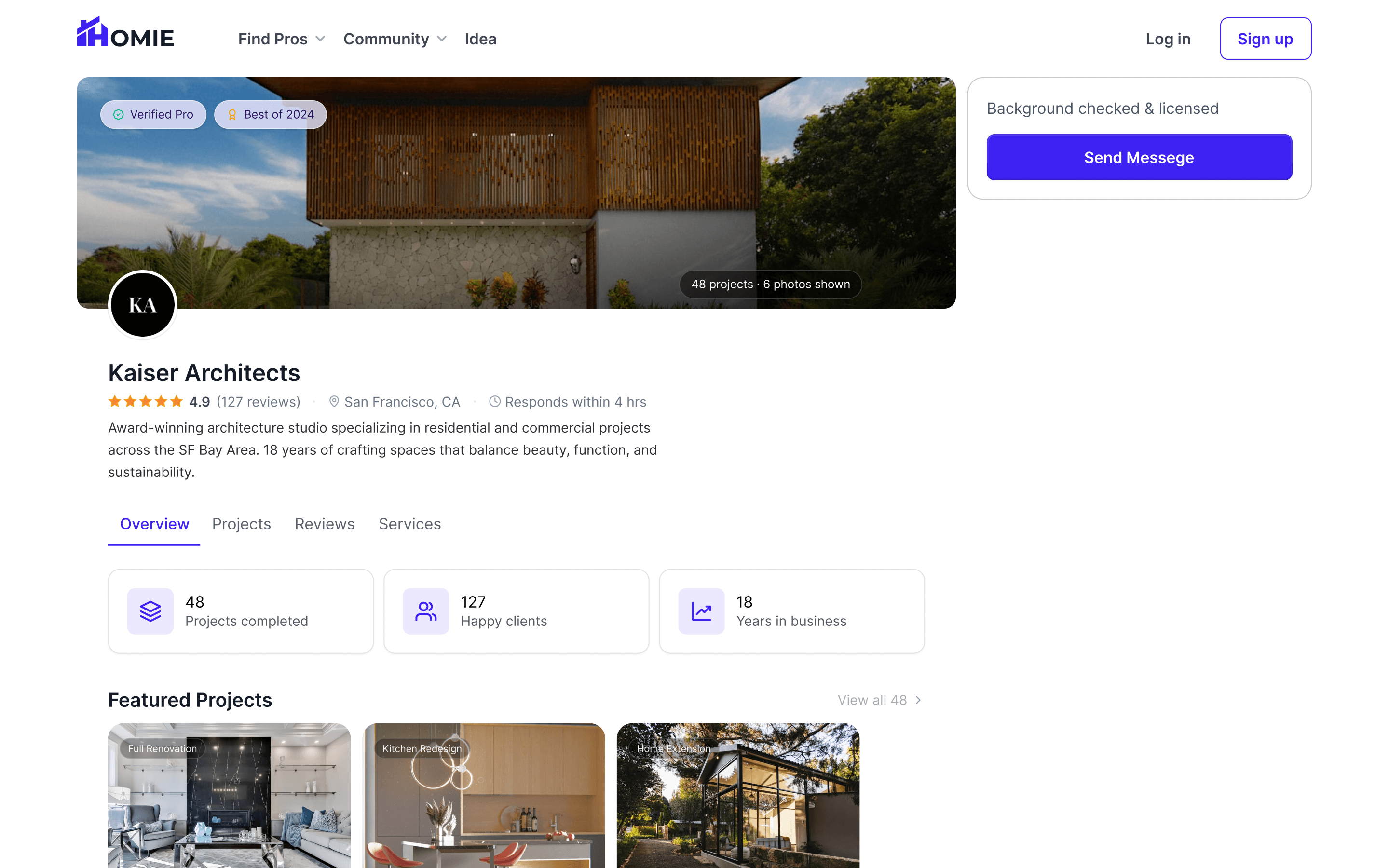
This exploratory journey is natural and valuable, but it creates a critical moment when inspiration turns into action. A user might discover a project they like, visit a professional’s profile, and decide to reach out.
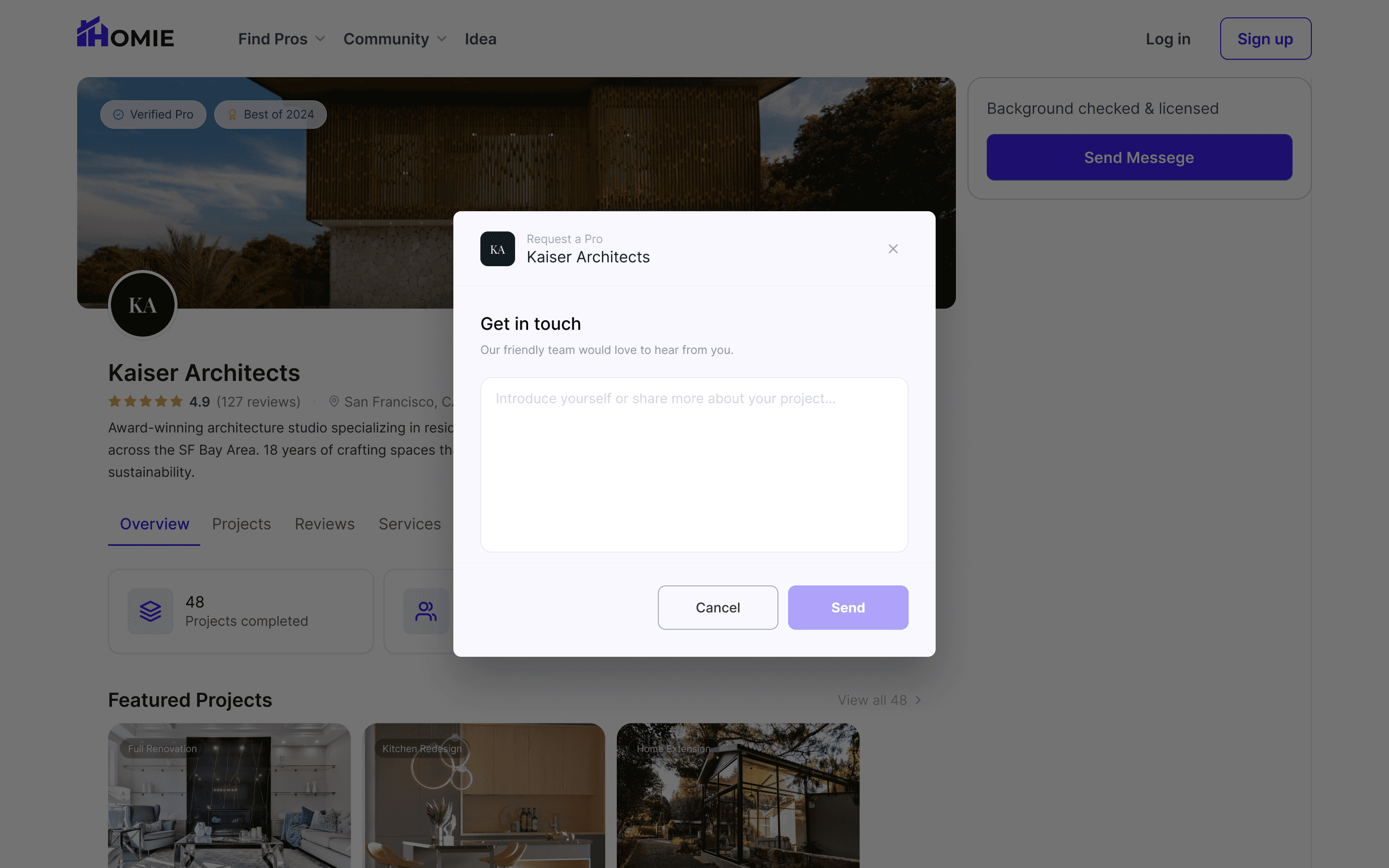
At that point, the platform enables contact, but does not help users define or communicate their actual needs.
This case study focuses on that moment, where an intuitive and high-intent flow lacks the structure needed to support better decisions.
The Problem
One of the most common paths on Homie starts with inspiration. A homeowner browses projects, discovers something they like, and navigates to a professional’s profile to learn more.
This flow feels natural and immediate, but it bypasses any form of qualification. By the time a user decides to reach out, there is no structured understanding of their project, no budget alignment, and no clear sense of fit.
Professionals receive inquiries with little context, making it difficult to evaluate whether a project is relevant. Homeowners, in turn, often reach out to professionals who may not match their needs.
The platform captures contact, but not intent.
As a result, both sides enter the conversation with uncertainty, leading to mismatched leads, unnecessary back-and-forth, and wasted time.
Where the Experience Breaks?
At the exact moment users decide to take action, the experience relies on an open text field with no structure, guidance, or qualification. What feels like a natural next step for the user creates immediate ambiguity for both sides.
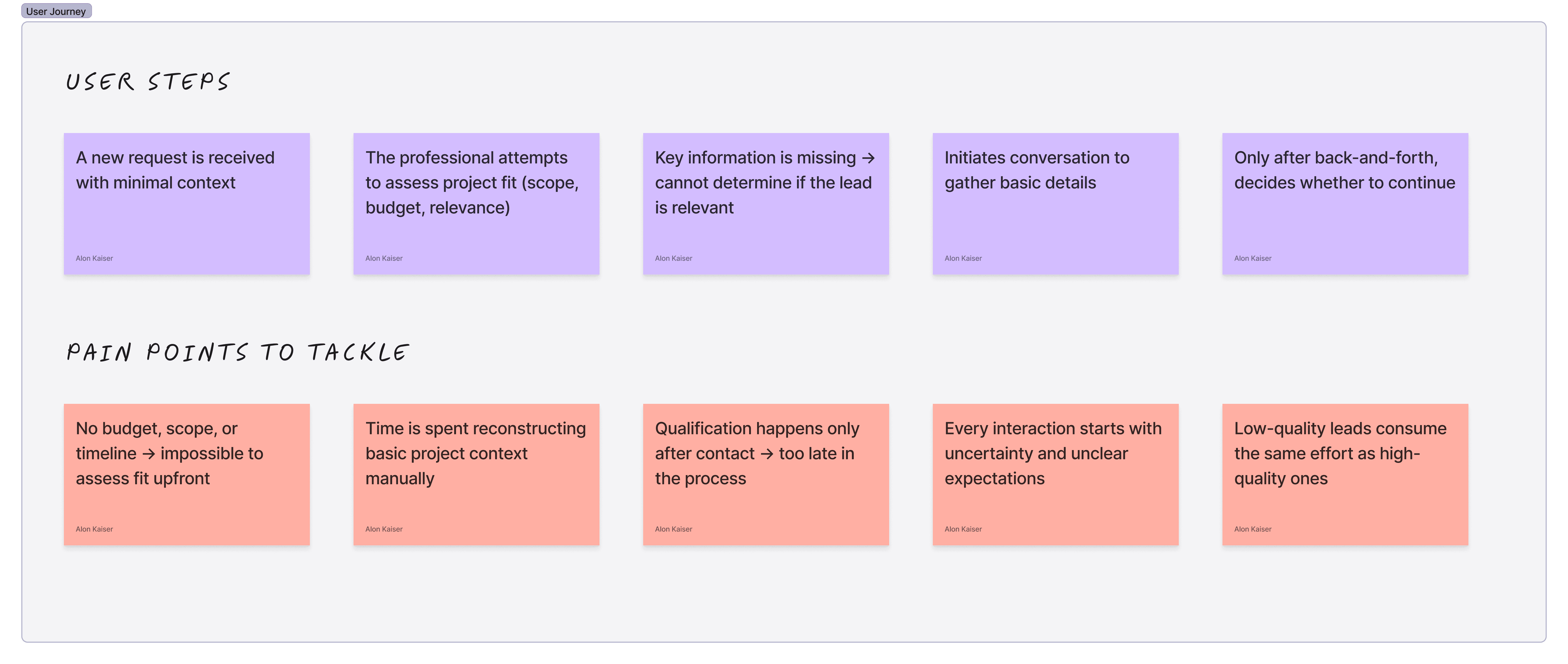
To understand why leads feel mismatched, I examined what users actually go through after initial contact, mapping their steps and pain points.
Key Insight
The system captures user intent, but fails to translate it into structured, actionable information, forcing professionals to qualify leads manually at a stage that is already too late.
Who are the users?
To understand why high-intent actions result in low-quality leads, I looked at how each side approaches the same moment.
Homeowner
Goal
Move quickly from inspiration to action and start conversations with professionals.
Mindset
“I’ll figure things out by talking to someone.”
Pain
Reaches out without enough clarity, leading to irrelevant matches and frustrating back-and-forth.
Professional
Goal
Evaluate incoming requests quickly and focus only on relevant, high-quality leads.
Mindset
“Is this worth my time?”
Pain
Lacks critical information upfront, forcing manual qualification and wasting time on low-fit leads.
Identifying the Gap
The platform allows users to reach out based on inspiration, but without validating key constraints like budget, scope, or fit.
Users expect relevance, while professionals receive unqualified leads.
The result is a mismatch in expectations, leading to low-quality conversations and wasted time on both sides.
Opportunity
The opportunity is to improve how users and professionals connect at the moment of contact.
By introducing lightweight qualification earlier in the flow, the platform can generate higher-quality leads, reduce unnecessary back-and-forth, and create more relevant matches.
Strengthening this core entry point improves trust in the platform and ensures that even the most intuitive, inspiration-driven flow delivers outcomes aligned with both sides’ expectations.
Solution Direction
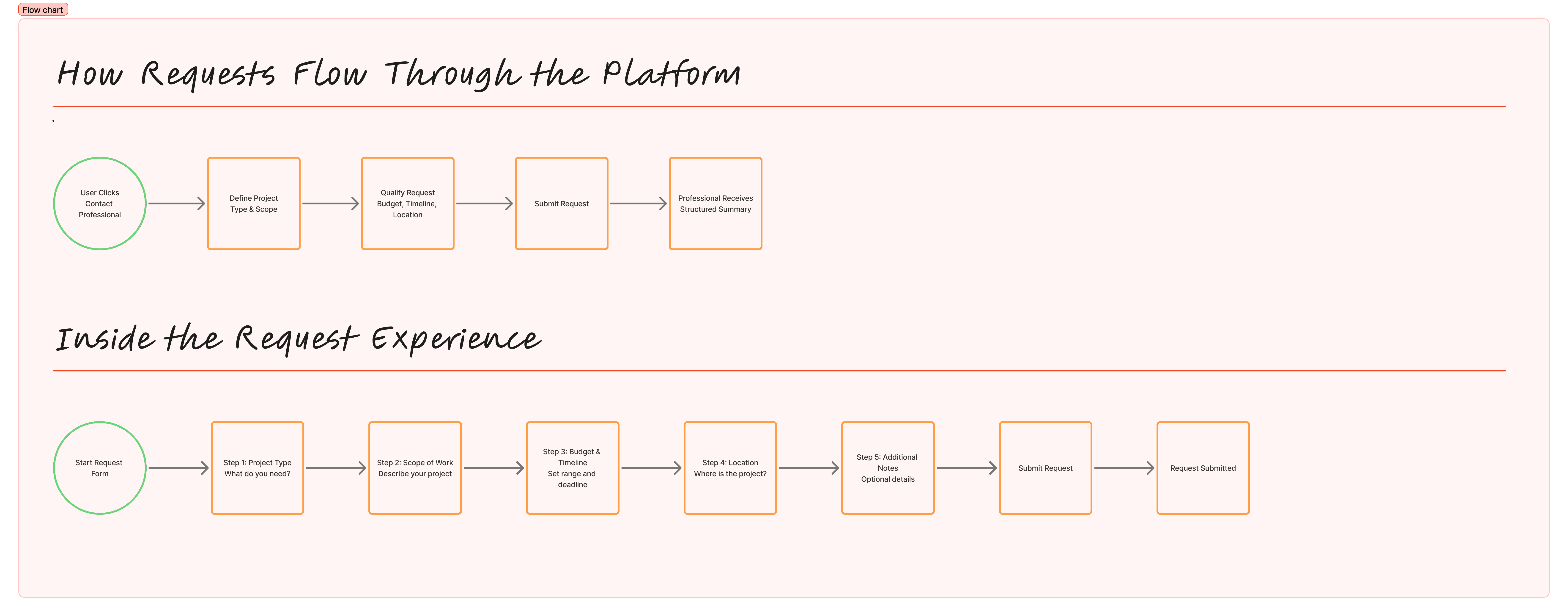
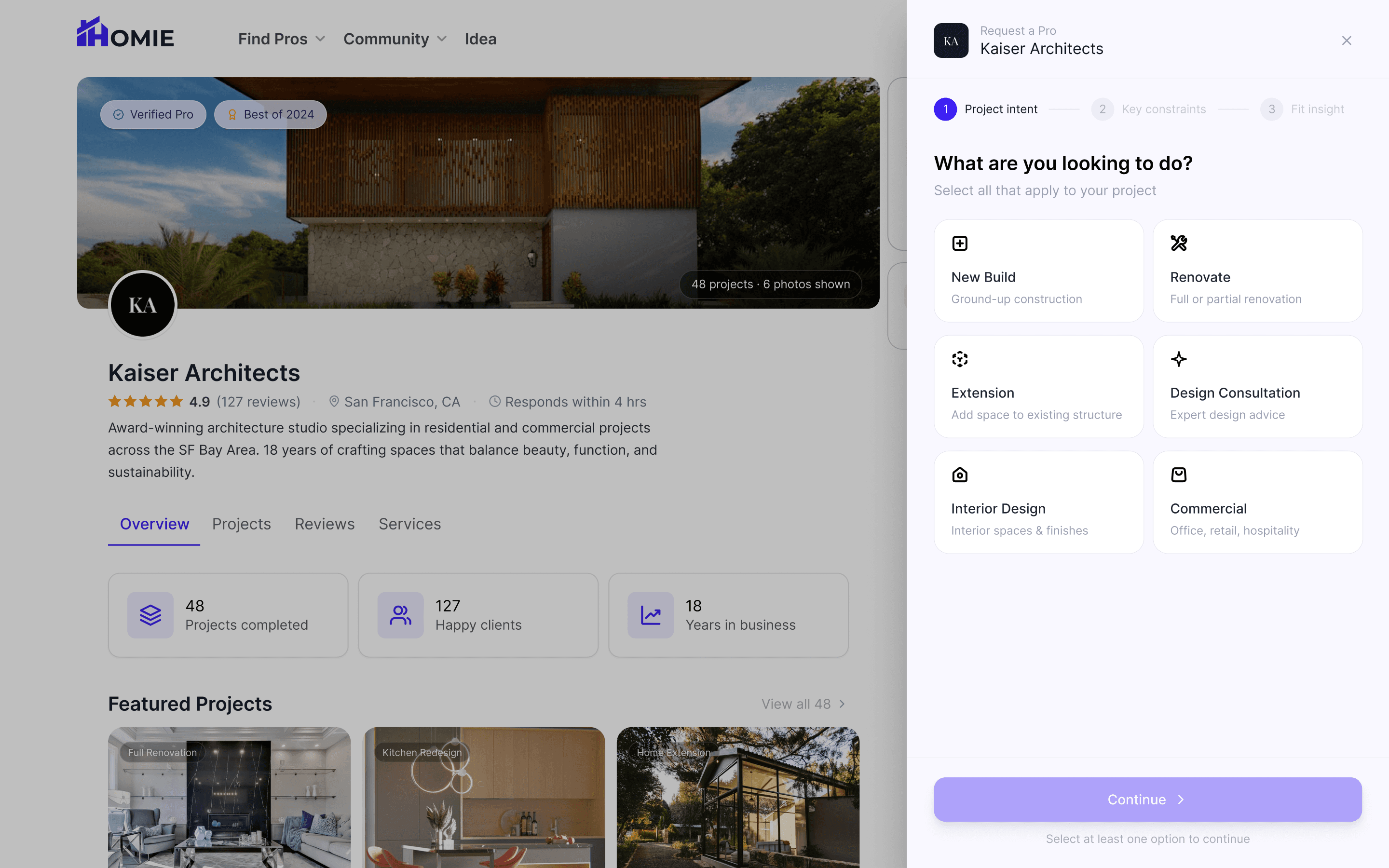
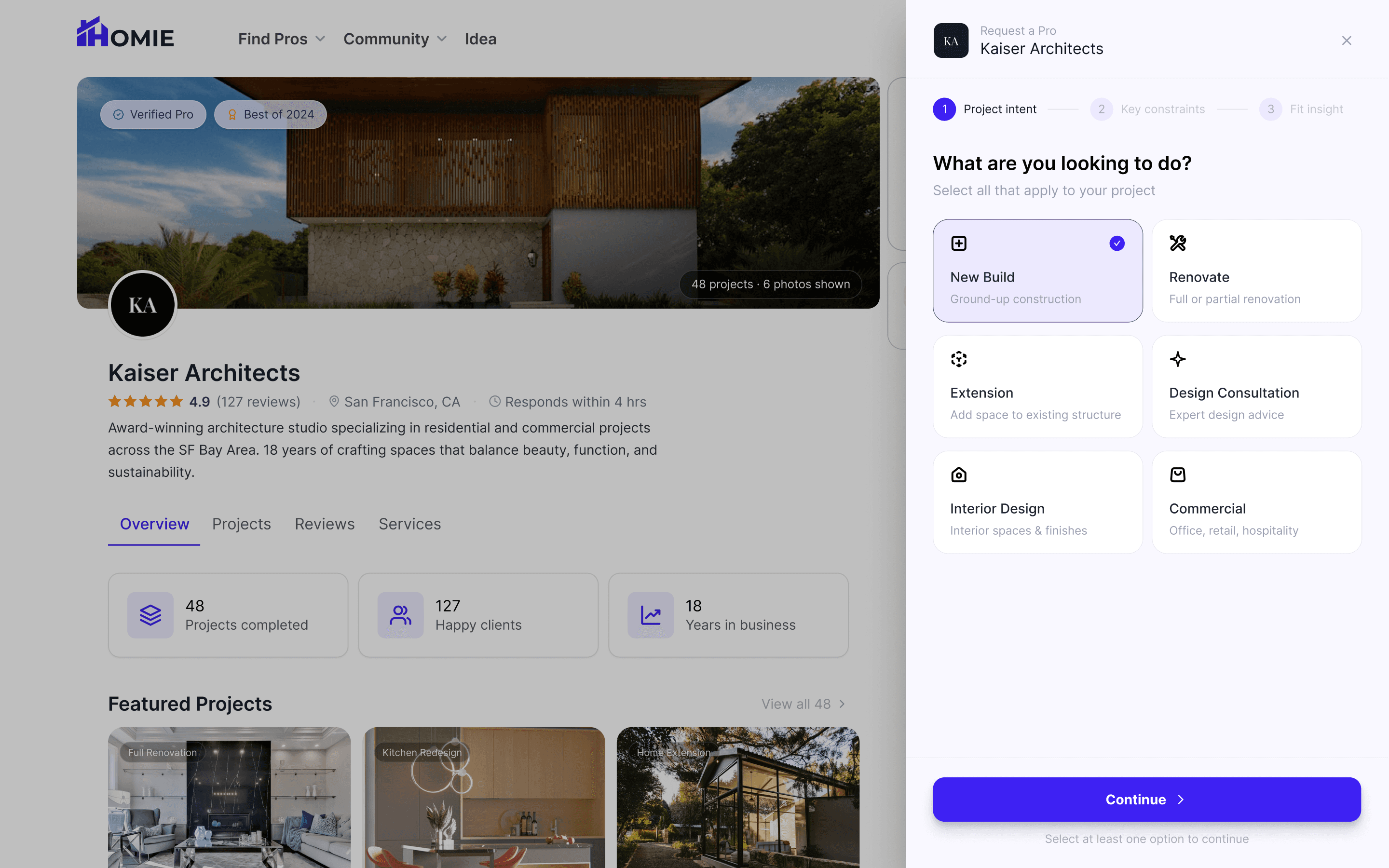
The contact experience is restructured into a guided, step-based request flow.
Instead of free-text messages, users are guided through a process that captures the minimum information required for professionals to evaluate a project.
Design Principles
Structure before contact
Unstructured requests create ambiguity and inefficiency → Introduced a guided request flow to define needs upfront
Qualification is part of UX
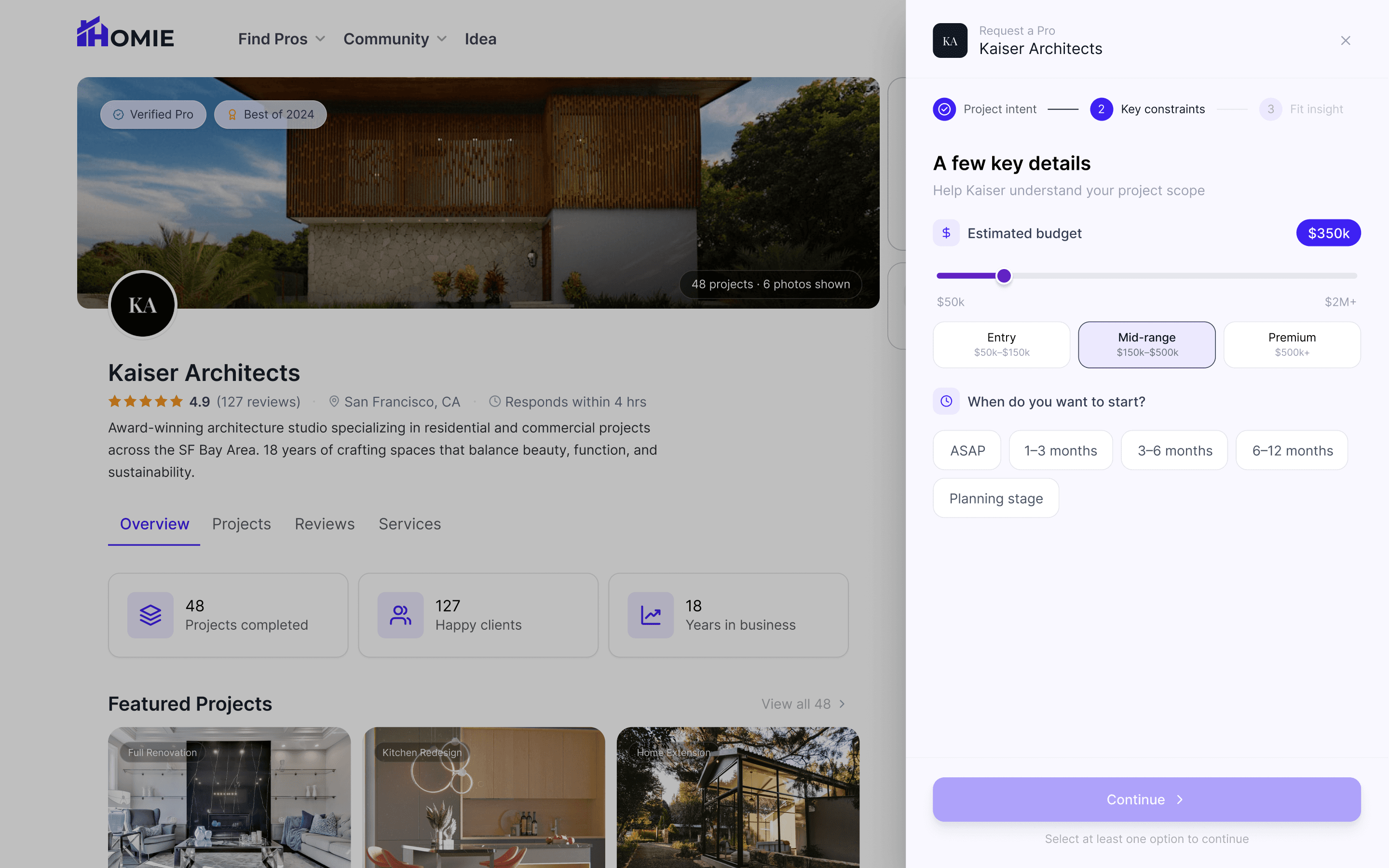
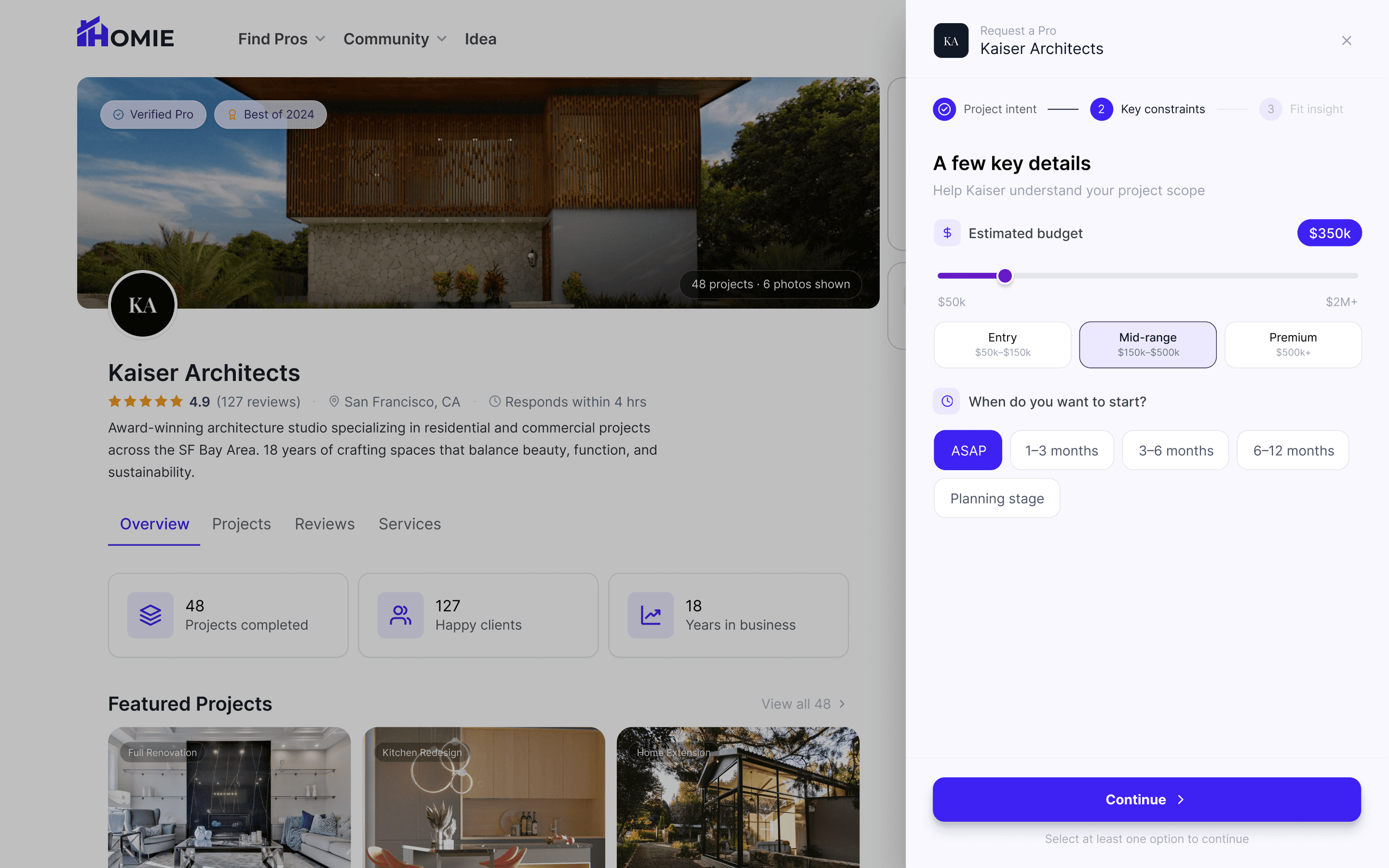
Filtering is a core part of the experience → Budget, scope, and timeline are required before submission
Reduce thinking, increase action
Users struggle with open-ended inputs → Replaced free text with structured selections
Better input leads to better matches
Higher-quality data improves outcomes across the system → Requests are delivered as structured summaries
Enable faster decision-making
Professionals need to quickly assess
relevance → Requests are formatted for quick evaluation
Designing a better way to connect
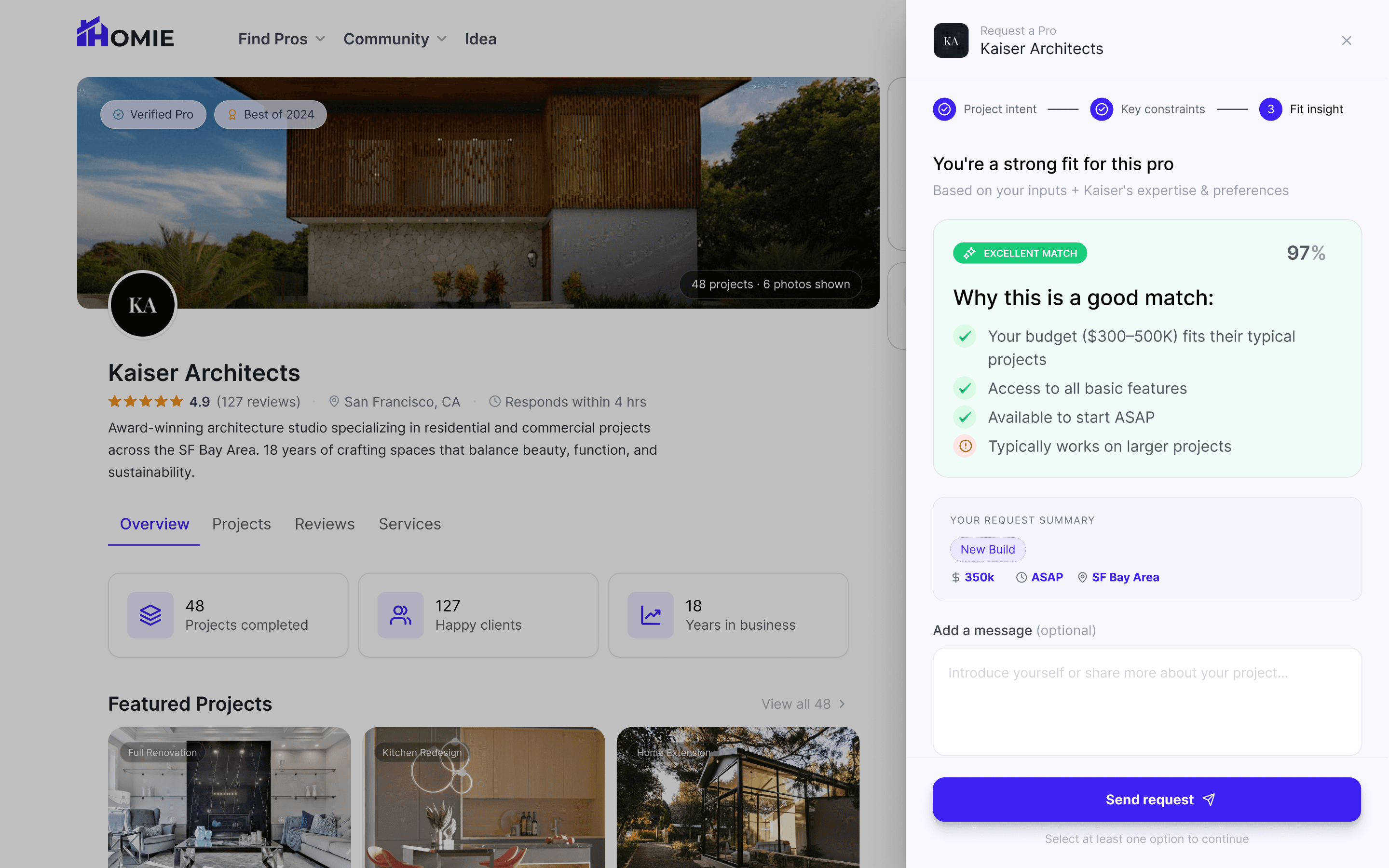
Users often discover professionals through inspiration. Instead of dropping them into an unstructured message box, the new flow introduces a “Check fit” entry point that guides users into a quick qualification process before reaching out.
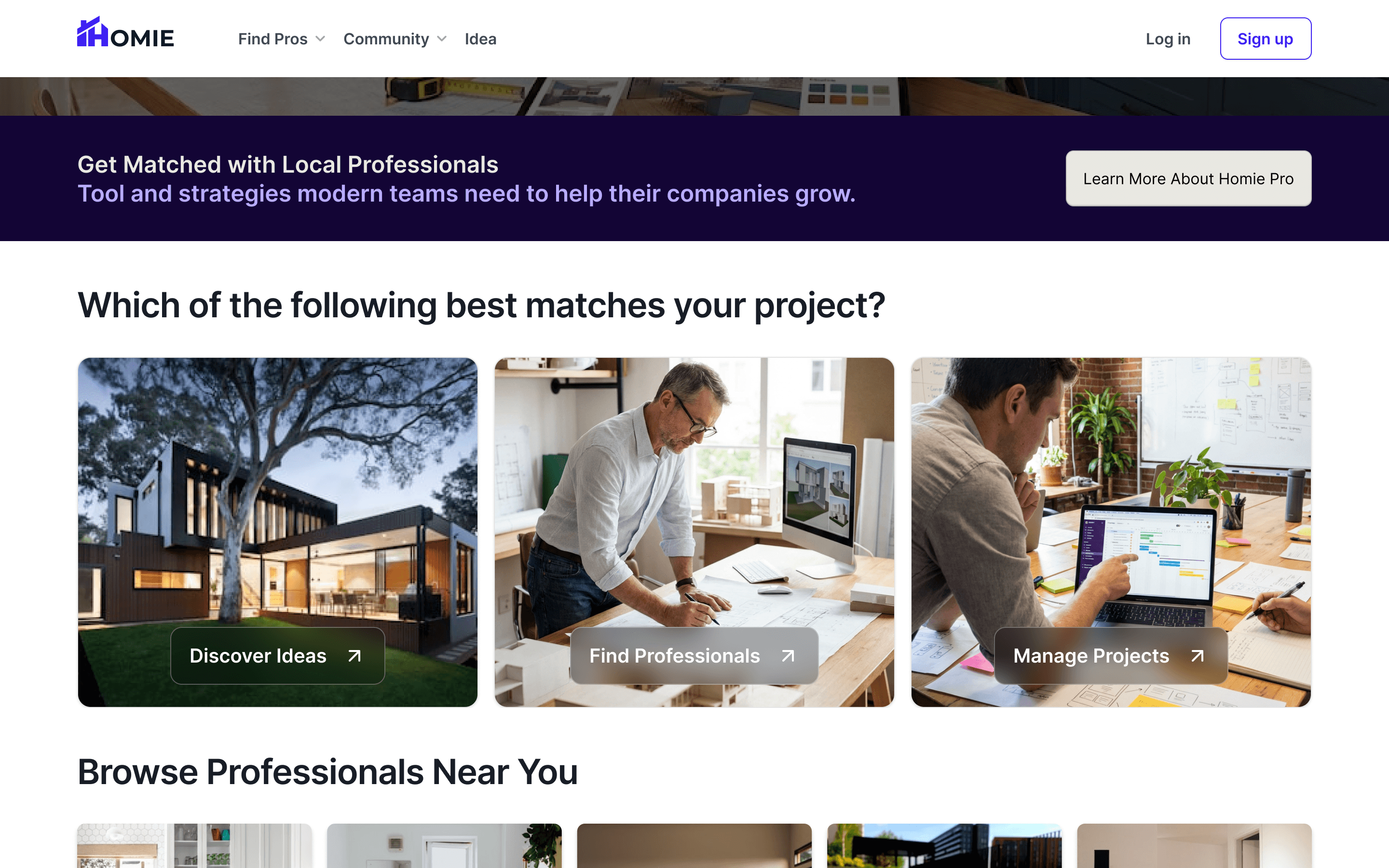
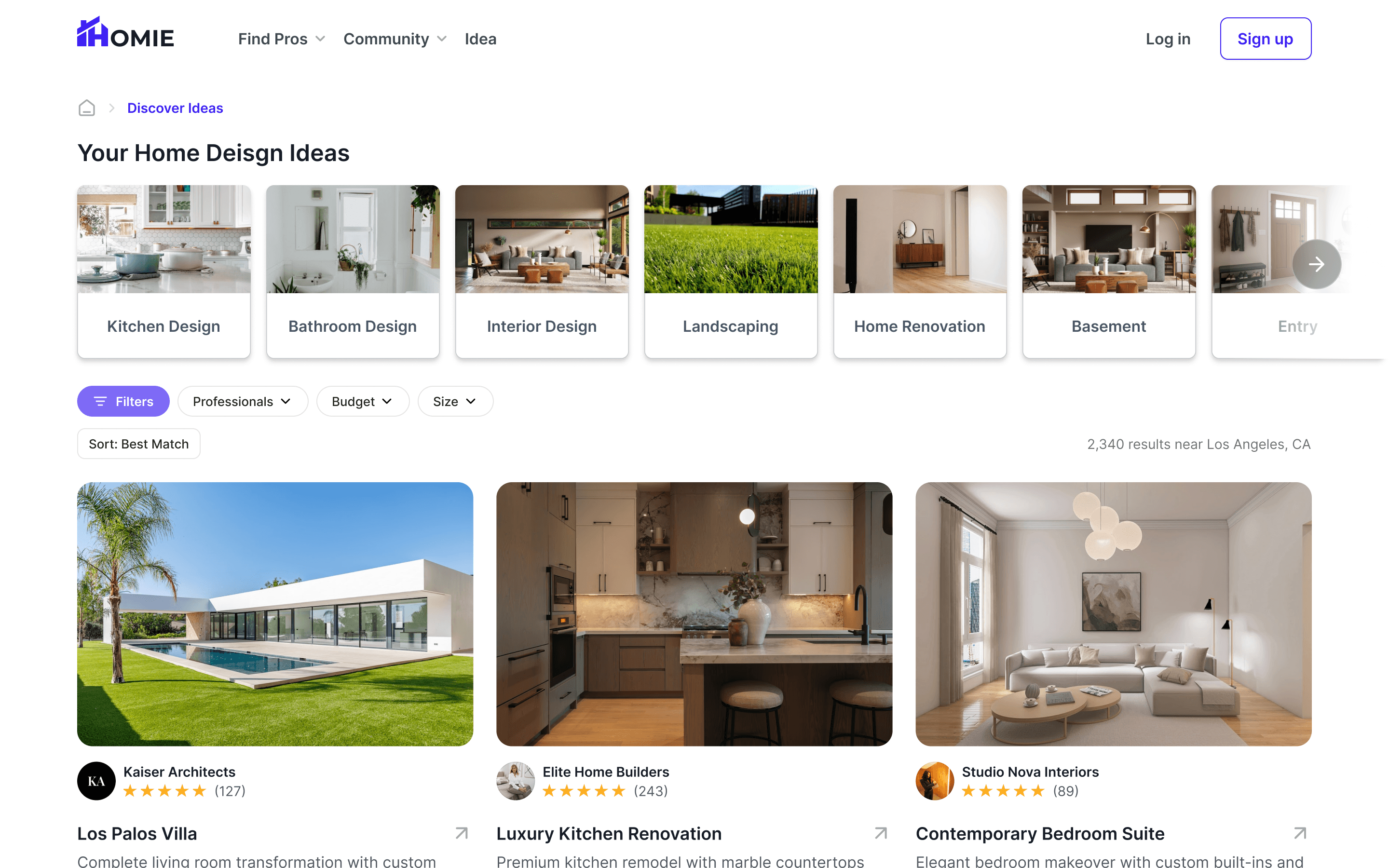
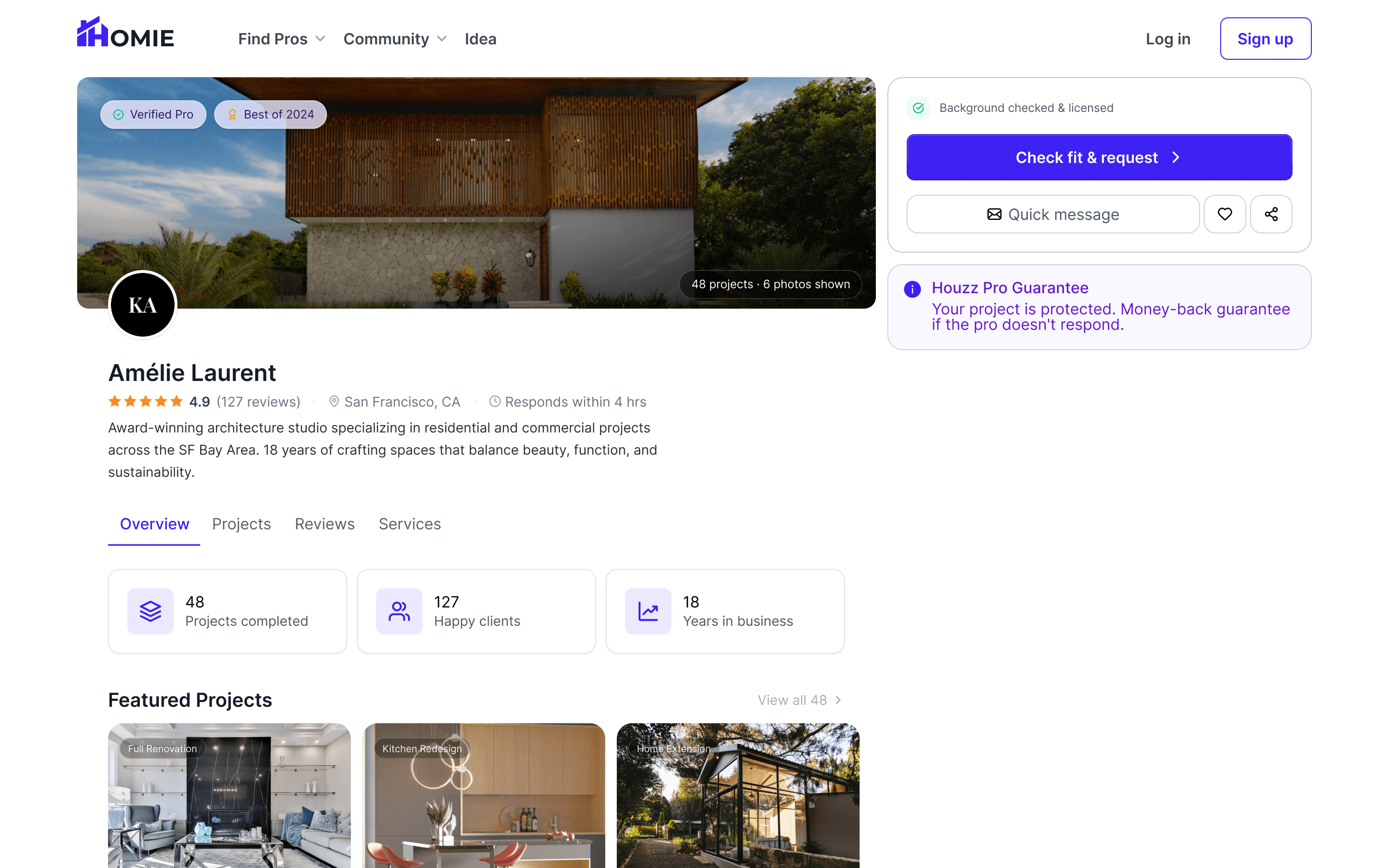
The request flow is a short, structured questionnaire designed to capture the minimum information needed for evaluation.
Users are guided to define their project type, budget, and basic scope, without relying on open text.
Before submitting, the flow provides a clear signal of fit, helping both sides understand whether the request is relevant.
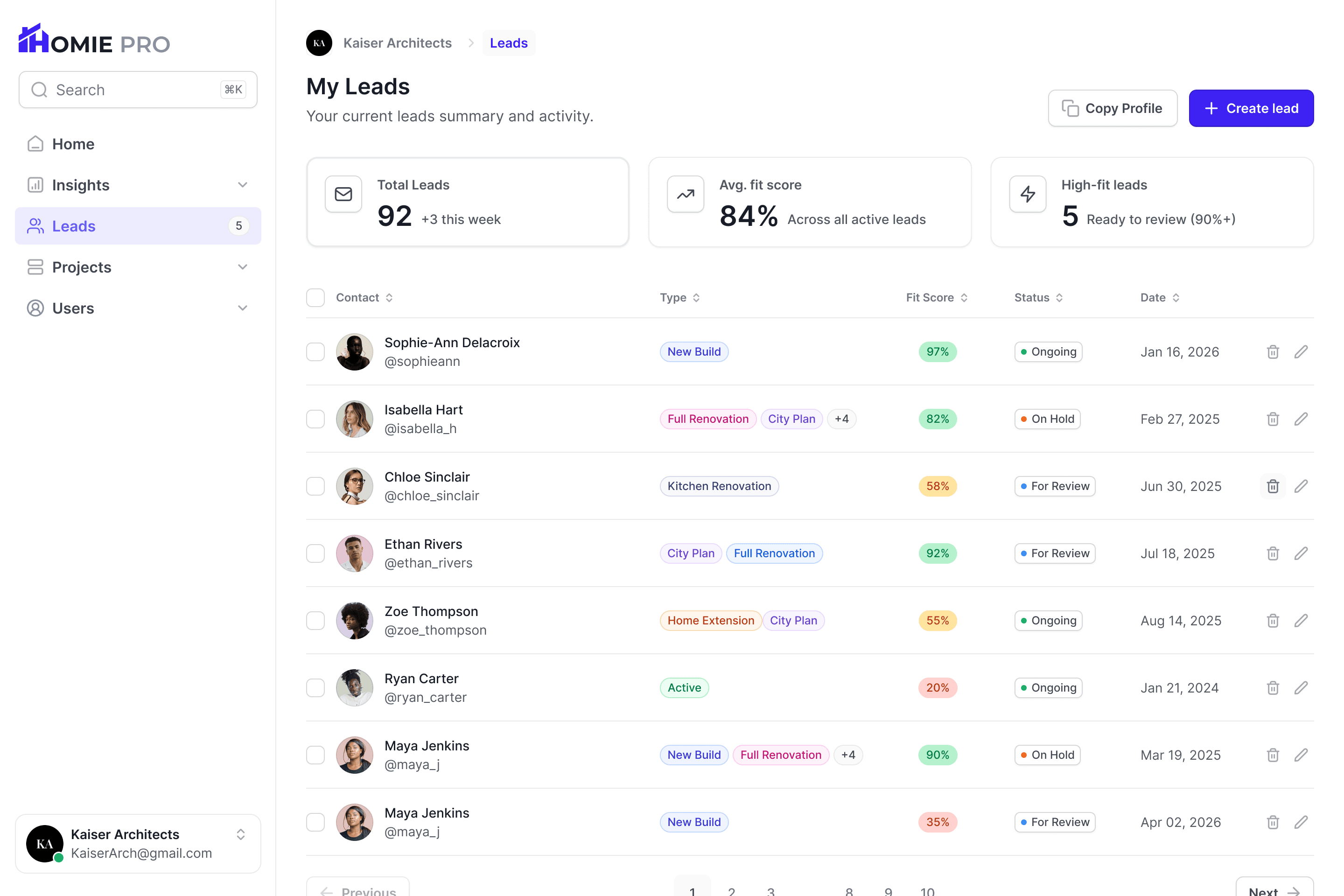
On the professional side, incoming requests are organized into a structured view, allowing quick evaluation of relevance.
A “fit score” was introduced as an additional signal, helping professionals prioritize high-quality leads and avoid wasting time on low-fit requests.
KPI & Looking Ahead
Coming from a background connected to the architecture field, I’ve seen how critical precision, trust, and time are in client–professional relationships.
Early misalignment here is costly, making lead quality a core challenge.
Future KPIs to measure impact:
Increase conversion from lead to project
Reduce time spent on manual qualification
Improve the ratio of high-fit requests
Expand the questionnaire to capture deeper project constraints
Strengthen lead prioritization tools for professionals
Guide users more clearly from inspiration to structured requests
Final Thoughts
This project focuses on enabling better decisions earlier in the process.
By introducing lightweight qualification at the right moment, the platform reduces ambiguity, improves lead quality, and respects the time of both sides.